Tuesday, January 8, 2019

January 8, 9, 10

 Image result for first performance words

January 8
 1st performance

January 9, 10
Criterion A - Knowing and Understanding   Due January 15, end of class  Upload your document to Managebac AND print it for your process journal.
 1.  What is storytelling?  (Write 3-4 sentences using your own words)

 (Storytelling in different cultures (various European, African, North American, Middle American, South American, Asian and Australian cultures.  Could include Japan, Russia, Native American, Middle East, etc.)
         

         2.  Research storytelling in your culture and give a brief introduction in your own words.
          3.  Research and choose 1 story from your culture.  Write the name of the story and give a brief summary. (Look for myths and legends in your culture. )(1 paragraph) Use your own words.
           4.  Research storytelling in another culture and give a brief introduction in your own words.
           5. Research and choose 1 story from another culture. Write the name of the story and give a brief summary.  (Look for myths and legends in that culture.) (1 paragraph)
           6. Critically analyze (compare AND contrast) these 2 stories  (How are they the same?  How are they different?  Look at content,  structure,  language, purpose, and anything else you think is notable).  Complete a Venn Diagram:  https://study.com/academy/lesson/what-is-a-venn-diagram-lesson-for-kids.html
           7.  What was the importance of story-telling in history? Explain, include details. Use your own words.
           8.   How have the stories told in the past influenced the present?  Explain, include details.  Use your own words.
           9.  How will this research help you prepare your performance?  Explain, include details. Use your own words.
 

Works Cited page required -  MLA 8 format

Remember, you will need a Works Cited page.  The Works Cited page is always the last page of your document.  Here are websites that will help you create the page properly:  Citation Machine -  http://www.citationmachine.net/ 

Cite This For Me - http://www.citethisforme.com/

Wednesday, January 2, 2019

January 3, 2019

Image result for happy 2019
https://happynewyear-2019.net/


January 3
1.  Warm-up:    
Seven-sentence story structure
Purpose:  Creativity, Story structure
Most stories can be boiled down to seven basic sentences. These sentences begin like this:
Once upon a time....
And every day...
Until one day...
And because of that...
Until finally...
And from that day...
It's good to use examples when explaining this, I will use 'Hannah Montana: The Movie' here:
Once upon a time there was a girl who was secretly a pop-star. And every day she was careful not to let anyone know her secret. Until one day she met a boy, and he discovered her double life. And because of that he was angry and felt betrayed. And because of that Hannah felt awful. Until finally she owned up to her double life. And from that day the people from her home have known and accepted her secret, and she and the boy are very happy.
a.  Have the students sit in a circle and ask them to come up with one sentence from the story structure each. If you have more than 7 students you can just begin from the first sentence again once you reach the eight student.
2. 1st performance

Tuesday, December 18, 2018

December 18, 19


December 18
1st performance

December 19
Warm-up games

1. Broken phone  (organized by Martim)
2.Werewolf (organized by Mariana)
3. 321 Acting Studio - Breathing Relaxation Technique: actors can find your center, focus and relax for auditions

4.  I'm Cool And So Are You
     purpose: good way to get to know others in the group and learn a little about them


Friday, December 7, 2018

December 11, 12, 13, 18

December 11
performance practice

December 12, 13, 18
1st performance

Sunday, December 2, 2018

December 4, 5 6

Welcome to Year 8 Drama!  This term we will be focusing on storytelling.

Image result for Storytelling
http://zinkmarketing.es/en/storytelling-the-art-of-telling-stories/


Welcome to Year 8 Drama!  This term we will be focusing on storytelling.

Who likes stories?  What's your favourite story?

December 4
1.  Let's talk a little about: Year 8 Drama expectations
2.  Let's talk a little about: Arts Process Journal
3. Can you access Managebac?

Warm-up for Drama class

4.  Warm-up - Three Things in Common:  designed to help people get to know each other better (ice breaker)


5.  Write Criterion B  (Developing Skills) reflection (include date of warm-up)
       Name of warm-up
       Purpose of warm-up
       What did you learn?
       How can this help you with your acting? 

December 5

1.  Warm-up   Exaggeration Circle -  good warm-up to work on taking something small and heightening it.


2.   Write Criterion B reflection.
       Name of warm-up
       Purpose of warm-up
       What did you learn?
       How can this help you?

3.  Guidelines for Storytellers - Explanation and Discussion

December 6
1. Irish story telling and Irish story tellers:

Muireann Murphy - https://www.youtube.com/watch?v=fyjrK_rmSPQ


 2.  Discuss

Let's look at the Guidelines for storytellers again. How does Ms. Murphy measure up? 
 
What are some of your favourite stories?  Why do you like them so much?  Can you identify any features of the stories that make them so enjoyable or memorable?

 3.  Research and choose a story that you would like to tell to the class. Guidelines:  Tell a story, 1-2 minutes in length, use your voice and body to add emphasis and make the story more appealing to your audience.

Monday, November 26, 2018

November 27, 28, 29

Image result for film vocabulary crossword
https://en.islcollective.com/resources/printables/worksheets_doc_docx/film_vocabulary_crossword/movies--tv/20680
November 27
1.  Crossword puzzle - film vocabulary
     Your cover teacher will give you a crossword puzzle to complete. Work in pairs to complete the puzzle, then insert the final work into your process journal.
2.  Quizlet - drama vocabuary
      Use this link to play games to learn vocabulary about drama: https://quizlet.com/174371600/drama-flash-cards/

November 28
Game day - Werewolf

November 29
Kahoot - student organized (Kiko)

Monday, November 19, 2018

November 20, 21, 22

Image result for commentary

November 20
Final presentations

November 21 - Criterion D:  Reflective Commentary


For this unit on Storytelling:
Statement of inquiry is:  Personal and cultural expression is expressed through stories.
Global Context is: Personal and cultural expression (artistry, craft, creation, beauty)

1.  Write a paragraph detailing how your research and the warm-ups  influenced your final performance.  Be specific, include details.

2.  Write a strong paragraph on the following topic.  Explain your point of view, include examples to support your ideas. (D strand i)

Considering all the stories you read and told this term, are stories always related to a particular culture  or  are the themes of stories always universal   or  are the themes of stories sometimes universal?

  3. Write a strong paragraph on the following topic.  Explain your point of view, include examples to support your ideas. (D  strand ii)

How do you think your performance and choice of story impacted (or influenced) your classmates? 

4. Write a paragraph on the following topic: Explain, include details. (D  strand iii)

How did your feedback help your classmates?  (Write some sentences in general terms, then think about 1 specific student and explain in detail how your feedback could help him/her. Write about how the feedback you received from your classmates, your self-evaluation, and teacher can help you in future performances.)


November 22
Finalize Process Journals

Wednesday, November 14, 2018

November 13, 14, 15

Image result for storytelling
https://mn2s.com/news/talent/put-storytelling-heart-events/

November 13, 14, 15
Criterion B - Final performances

Tuesday, November 6, 2018

November 6, 7, 8

Image result for statement of artistic intentions in drama

November 6
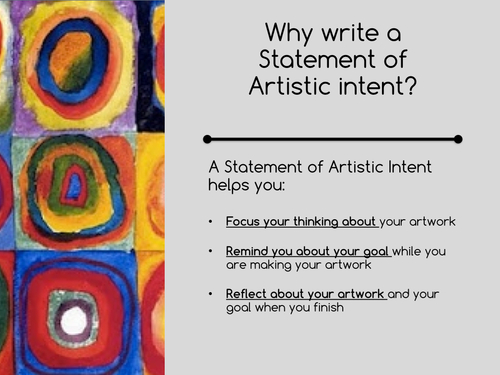
Preparation for Statement of Artistic Intent

November 7
Criterion C - Statement of Artistic Intent

Statement of Artistic Intent      (3 paragraphs)

Paragraph 1. What are you doing? (purpose)
This paragraph includes:
- what topic you are studying this term in Drama  
- small background about storytelling
- what your task is  


Paragraph 2. Why are you doing this    (message and inspiration)
- name and brief plotline/storyline of your story
- theme or moral of your story
- what stories did you look at before you chose this one
- why did you choose this story (inspiration)
- what do you want the other Year 8s to learn from your story


Paragraph 3.  How are you going to achieve this   (production and performance elements)
 - how will you bring your story to life? (include costume, props and acting techniques that you will use)   
- what challenges do you think you will face when telling your story in front of the class?  (minimum 3)
-how will you overcome these challenges?


November 8 
Performance preparation 

November 13, 14, 15
Final Performances


Tuesday, October 23, 2018

October 23, 24, 25

Image result for be calm and tell a story 
October 23
1.  Seven-sentence story structure
Most stories can be boiled down to seven basic sentences. These sentences begin like this:
Once upon a time....
And every day...
Until one day...
And because of that...
Until finally...
And from that day...
It's good to use examples when explaining this, I will use 'Hannah Montana: The Movie' here:
Once upon a time there was a girl who was secretly a pop-star. And every day she was careful not to let anyone know her secret. Until one day she met a boy, and he discovered her double life. And because of that he was angry and felt betrayed. And because of that Hannah felt awful. Until finally she owned up to her double life. And from that day the people from her home have known and accepted her secret, and she and the boy are very happy.
1. Have the students sit in a circle and ask them to come up with one sentence from the story structure each. If you have more than 7 students you can just begin from the first sentence again once you reach the eight student.
2. Once you've done this you can broaden the exercise and take away the 7-sentence restriction, allowing students to tell the story in as many sentences as they like.
October 24

1. Talk about "Statement of Artist Intention


Statement of Artistic Intent      (3 paragraphs)

Paragraph 1. What are you doing? (purpose)
This paragraph includes:
- what topic you are studying this term in Drama  
- small background about storytelling
- what your task is 

Paragraph 2. Why are you doing this    (message and inspiration)
- name and brief plotline/storyline of your story
- theme or moral of your story
- what stories did you look at before you chose this one
- why did you choose this story (inspiration)
- what do you want the other Year 8s to learn from your story


Paragraph 3.  How are you going to achieve this   (production and performance elements)
 - how will you bring your story to life? (include costume, props and acting techniques that you will use)   
- what challenges do you think you will face when telling your story in front of the class?  (minimum 3)
-how will you overcome these challenges?

2.  Choose your final performance story

October 25 
Image result for scary halloween spider web 
Halloween at OIS

1.  Scary videos


Monday, October 15, 2018

October 16, 17, 18


Image result for aesops fables
October 16
Finish analyzing 3 stories (use worksheet)

October 17
You have analyzed 3 stories according to the "guidelines for storytellers."
Choose a story that you will present for your final performance.  Choose well!

Brief for final performance -
1.  2 minute limit
2.  Knowledge of story
3. Use of Voice
4. Physical Delivery
5. Posture and eye contact
6. Message/theme


October 18

Drama Toolkit - skills practice

1.  Shake out
     Classic warm-up to get people energized


2.  


Dialogue - the words that the actor speaks

3 Ways Acting Exercise - helps with delivery


List of acting emotions for practice:

  • anger
  • anticipation
  • anxiety
  • arrogance
  • embarrassment
  • boredom
  • confidence
  • contentment
  • depression
  • disappointment
  • disgust
  • ecstasy
  • exhaustion
  • fear
  • frustration
  • guilt
  • happiness
  • hope
  • hysteria
  • impatience
  • jealousy
  • loneliness
  • love
  • lovesick
  • lust
  • mischievous
  • passion
  • romance
  • shock
  • shyness
  • suspicion
Acting is so much fun.
Halloween is right around the corner.
I want to go home now.
Please.
Would you like to go shopping today?
What's for dinner?
The pencil is mine.
I need a haircut.
My homework is in my locker.
Are you serious?
He's coming back.
She's changed her mind.
That's my friend.
I didn't know that.
Where are you going?
3.  

Tableau / Still Image
  purpose: developing character work skills
A still image or tableau can be used in solo work up to large group work in order to portray the given subject matter. A very useful tool in drama since it can form the basis of many sessions and activities.
Description
When creating a tableau the participants need to focus on their physical positioning, body language and facial expression. There is no speech in a tableau and as such the importance of their physicality should be stressed.
In creating a tableau the participants are putting themselves into a scene as characters with thoughts and feelings. They must ask themselves:
  • Where and how shall I stand?
  • What do I want the audience to think?
  • What facial expression shall I hold?
  • Where shall I place myself in relation to others?
  • What are the alternatives?
For younger participants it can be described as a photograph and for the first few tableaux you can be the photographer who is positioning the subjects, moulding their expressions, etc
Cheerleader family, Snobby family, Superhero family, Wizard family, Shy family, Royal family, Corporate family

4.  Thought Tap
Freeze the drama activity and tap participants on the shoulder for them to reveal their thoughts.escription
A versatile drama strategy that can be used within many drama activities. It involves the workshop leader freezing the action and tapping individuals on the shoulder for them to reveal their inner thoughts.
This encourages participants to really think about the character or situation they are portraying and to use the thought tap to enforce their body language in their frozen position.
This works very well alongside Tableaux, or frozen pictures, particularly those that show a contrasting status between those involved.Further Development
The whole group can portray the same character or situation to explore a variety of thoughts.


Monday, October 8, 2018

October 9, 10, 11

Related image
https://www.goyokids.com/blogs/yoga-ideas-for-kids/the-power-of-storytelling-an-infographic
October 9  
Printing of Criterion A


1.  Warm-up:  Three ways acting exercise  -  helps with delivery


https://i.pinimg.com/736x/24/62/ed/2462ed4be37ae8677840fb27d638e561--companion-gardening-companion-planting-layout-vegetables.jpg
A Legend:  Three Sisters (http://www.mlui.org/userfiles/filemanager/1713/)
 1)  Read
 2) Answers the questions
 3) Discuss

October 10

1.  Fable - What is a fable?  It is a literary genre. It is a short story that teaches a moral lesson.
The most famous fables are from Aesop. According to Wikipedia, "Aesop ( c. 620 – 564 BCE) was a Greek fabulist and story teller credited with a number of fables now collectively known as Aesop's Fables. Although his existence remains unclear and no writings by him survive, numerous tales credited to him were gathered across the centuries and in many languages in a storytelling tradition that continues to this day. Many of the tales are characterized by animals and inanimate objects that speak, solve problems, and generally have human characteristics."

2. Let's try one: The tortoise and the  hare, an Aesop Fable
http://diannedelascasas.com/wp-content/uploads/2012/10/Tortoise_Hare.pdf

Aespo's fables can be found here:  http://www.read.gov/aesop/

3. Find a story (research) that you like online and  read it aloud to yourself.  
Evaluate your stories once more for tellability and learnability as they read aloud, as this will be a different experience than reading it in your head and assessing it. Keep in mind the specifics of tellability and learnability.

4.  Three ways acting exercise  -  helps with delivery

October 11
1. Three ways acting exercise  -  helps with delivery
2. Read and analyze 3 stories. Use the Worksheet to guide you.

Monday, October 1, 2018

October 2, 3, 4

Image result for storytelling
http://www.grammarbank.com/beginners-esl-lessons.html


October 2, 3, 4

Criterion A - Knowing and Understanding   Due October 4, end of class  Upload your document to Managebac

 1.  What is storytelling?  (Write 3-4 sentences using your own words)

 (Storytelling in different cultures (various European, African, North American, Middle American, South American, Asian and Australian cultures.  Could include Japan, Russia, Native American, Middle East, etc.)
         

         2.  Research storytelling in your culture and give a brief introduction in your own words.
          3.  Research and choose 1 story from your culture.  Write the name of the story and give a brief summary. (Look for myths and legends in your culture. )(1 paragraph) Use your own words.
           4.  Research storytelling in another culture and give a brief introduction in your own words.
           5. Research and choose 1 story from another culture. Write the name of the story and give a brief summary.  (Look for myths and legends in that culture.) (1 paragraph)
           6. Critically analyze (compare AND contrast) these 2 stories  (How are they the same?  How are they different?  Look at content,  structure,  language, purpose, and anything else you think is notable).  Complete a Venn Diagram:  https://study.com/academy/lesson/what-is-a-venn-diagram-lesson-for-kids.html
           7.  What was the importance of story-telling in history? Explain, include details. Use your own words.
           8.   How have the stories told in the past influenced the present?  Explain, include details.  Use your own words.
           9.  How will this research help you prepare your performance?  Explain, include details. Use your own words.
 

Works Cited page required -  MLA 8 format

Remember, you will need a Works Cited page.  The Works Cited page is always the last page of your document.  Here are websites that will help you create the page properly:  Citation Machine -  http://www.citationmachine.net/ 

Cite This For Me - http://www.citethisforme.com/

Monday, September 24, 2018

September 25, 26, 27

Image result for storytelling
http://thecommunitymanager.com/2013/11/14/five-tips-on-using-storytelling-for-community-management/


September 25

1.  Warm-up:  Woosh, Bang, Pow, builds and focuses on energy, commitment and pacing


2. Criterion B reflection

Name of warm-up:  Woosh, Bang, Pow
Purpose: builds and focuses on energy, commitment and pacing
What did you learn?
How can it help you with your acting?

What makes a good story?  p. 124
3.  Read the text
4.  Activity:  What makes a story a story?
     Follow the instructions and complete the activity.  Work in pairs or groups of 3.


September 26
1.  Point of view p. 125
2.  Activity:  Who is telling the story?
     Follow the instructions and complete the activity.  Work in pairs or groups of 3.

September 27

EasyBib (http://www.easybib.com/mla8-format/website-citation)

Criterion A - Research and Assessment

1.  Open a Word document
2.  Type your name at the top left
3.  Title the document   Storytelling   Criterion A - Knowing and Understanding 
4.  Conduct the following research:
  1. What is storytelling?  (write 3-4 sentences using your own words)
  2.  Storytelling in different cultures  (various European, African, North American, Middle American, South American, Asian and Australian cultures. Could include Japan, Russia, Native American, Middle East, etc. 
  • Research storytelling in your culture and give a brief introduction in your own words. (1 paragraph)
  •  Research and choose 1 story from your culture.  Write the name of the story and give a brief summary. Look for myths and legends in your culture. (1 paragraph)
Works Cited page required -  MLA 8 format.

Sunday, September 16, 2018

September 18, 19, 20

Image result for storytelling
http://www.bcgconnect.com/influence-donors-consistent-storytelling/


September 18, 19, 20
1st performance
giving and receiving feedback

Monday, September 10, 2018

September 11, 12, 13

September 11
1.  30 minutes - Follow the link to learn vocabulary about different kinds of stories: https://quizlet.com/151597527/stories-flash-cards/

2.  30 minutes - Research and prepare a story to tell in front of the class. The story should be more than 1 minute but less than 2 minutes.

September 12
1. Irish story telling and Irish story tellers:

Muireann Murphy - https://www.youtube.com/watch?v=fyjrK_rmSPQ


 2.  Discuss
What are some of your favourite stories?  Why do you like them so much?  Can you identify any features of the stories that make them so enjoyable or memorable?

September 13

1.   Warm-up  3 2 1 Acting Studio:  Breathing Relaxation Technique - can find your center, focus and relax for auditions


2.  Research and choose a story that you would like to tell to the class. Guidelines:  Tell a story, 1-2 minutes in length, use your voice and body to add emphasis and make the story more appealing to your audience.

Sunday, September 2, 2018

September 4, 5, 6

https://static.wixstatic.com/media/736b54_7a67687bac4f44dfb60d042f74aa6d8f.png


Welcome to Year 8 Drama!  This term we will be focusing on storytelling.


Image result for Storytelling
http://zinkmarketing.es/en/storytelling-the-art-of-telling-stories/


Welcome to Year 8 Drama!  This term we will be focusing on storytelling.

Who likes stories?  What's your favourite story?

September 4
1.  Let's talk a little about: Year 8 Drama expectations
2.  Let's talk a little about: Arts Process Journal
3. Can you access Managebac?

Warm-up for Drama class

4.  Warm-up - Three Things in Common:  designed to help people get to know each other better (ice breaker)


5.  Write Criterion B  (Developing Skills) reflection (include date of warm-up)
       Name of warm-up
       Purpose of warm-up
       What did you learn?
       How can this help you with your acting?

September 5

1.  Warm-up   Exaggeration Circle -  good warm-up to work on taking something small and heightening it.


2.   Write Criterion B reflection.
       Name of warm-up
       Purpose of warm-up
       What did you learn?
       How can this help you?

3.  Guidelines for Storytellers - Explanation and Discussion

September 6
1. Irish story telling and Irish story tellers:

Muireann Murphy - https://www.youtube.com/watch?v=fyjrK_rmSPQ


 2.  Discuss
What are some of your favourite stories?  Why do you like them so much?  Can you identify any features of the stories that make them so enjoyable or memorable?


 3.  Research and choose a story that you would like to tell to the class. Guidelines:  Tell a story, 1-2 minutes in length, use your voice and body to add emphasis and make the story more appealing to your audience.

September 11
1.  Warm-up -  Breathing Relaxation Technique
Breathing exercise to help you learn to relax before performing


2.  Warm-up reflection

       Name of warm-up
       Purpose of warm-up
       What did you learn?
       How can this help you?

 3.  Prepare your 1st performance.
      Guidelines:  Tell a story, 1-2 minutes in length, use your voice and body to add emphasis and make the story more appealing to your audience.