Tuesday, December 12, 2017
December 12, 13, 14
December 12, 13, 14
1. Warm-up: Breathing exercise to help you learn to relax before performing.
2. Story-telling: 1st performance.

Tuesday, December 5, 2017
December 6, 7
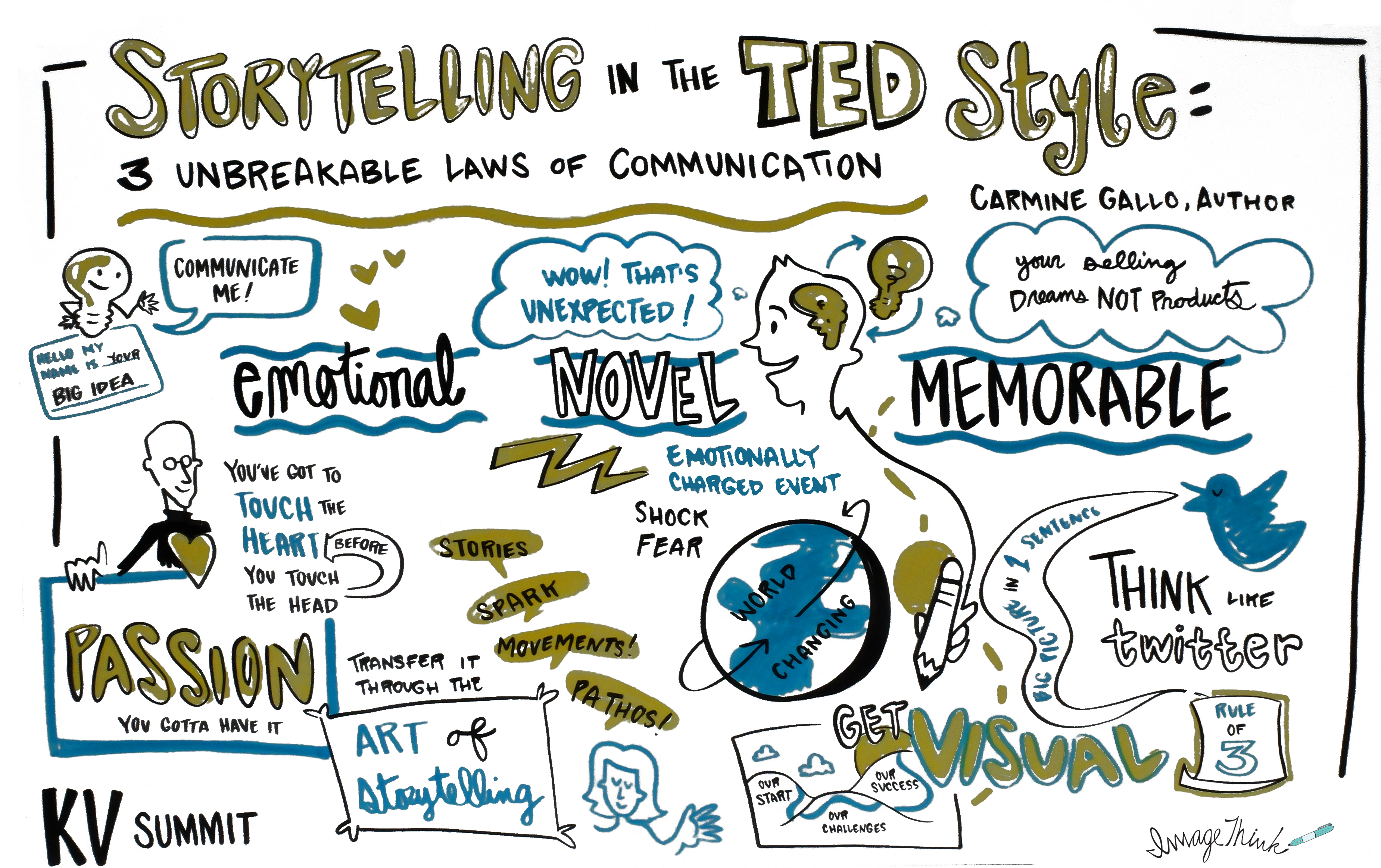 |
| http://www.khoslaventures.com/wp-content/uploads/kv_summit_unbreakable_laws_of_storytelling_carmine_gallo.jpg |
Guidelines for Storytellers - Explanation and Discussion
Irish story telling and Irish story tellers:
Muireann Murphy - https://www.youtube.com/watch?v=fyjrK_rmSPQ
Warm-up Exaggeration Circle - good warm-up to work on taking something small and heightening it.
Write Criterion B reflection.
Name of warm-up
Purpose of warm-up
What did you learn?
How can this help you?
Storytelling 1 -
Research and choose a story that you would like to tell to the class
Prepare your performance
Deliver performance
December 5
 |
| https://blog.shareaholic.com/wp-content/uploads/2014/07/Visual-storytelling.jpg |
Welcome to Year 8 Drama! This term we will be focusing on storytelling.
1. Let's talk a little about Year 8 Drama expectations
2. Let's talk a little about your Arts Process Journal
3. Can you access Managebac?
Warm-up for Drama class.
4. Shake out - energizing, good for getting everyone in sync and connected
https://youtu.be/GU3h1Q3Dg4o?list=PL0F098B1E301351CC
Monday, November 20, 2017
November 21, 22, 23
November 21, 22, 23
1. Warm-up: The "group count" warm-up working on focus and creating a group mind.
2. We still have 1 more drama presentation to watch.
3. Self-evaluation: complete the worksheet
4. Self-evaluation: answer the following questions. . .
a. What went well?
b. What went wrong?
c. How will you improve upon things that did not go well?
1. Warm-up: The "group count" warm-up working on focus and creating a group mind.
2. We still have 1 more drama presentation to watch.
3. Self-evaluation: complete the worksheet
4. Self-evaluation: answer the following questions. . .
a. What went well?
b. What went wrong?
c. How will you improve upon things that did not go well?
Monday, November 13, 2017
November 14, 15, 16
 |
| http://www.partyfiestar.sg/wp-content/uploads/2016/10/its-story-time-children-storytelling-singapore.jpg |
November 14, 15
1) Warm-up - led by Danila
The name of this exercise is…. becoming a mime
the purpose is to get ready to act without words. You know, it is very annoying to come to a new country not speaking its language, and be bored. Sometimes you will watch TV, but you don’t understand the language! Oh NO! But here is the thing you might understand this by looking at what they do. So here we go, lets practice this,
ok so how do we do this? We do something from everyday life without objects, or words. And the audience is trying to guess what was that. If they do then… well, well done. So, what are you waiting for? Let’s begin…
2) Student performances
In addition to our individual feedback, we will each give general feedback to each storyteller.
On a scale of 1-5 (5=excellent, 1=limited) give the storyteller a "general" rating.
Did the actor’s body language help the performance?
Was there a clear theme or moral?
Did the actor have good voice control? (volume, pace)
Did the actor have good
articulation/pronunciation?
Did you enjoy the performance?
Tuesday, October 24, 2017
October 24, 25, 26
October 24, 25, 26
The woosh bang pow warm-ups builds and focuses on energy, commitment and pacing.
This week we will:
1. Select a story
2. Practice delivery
3. Prepare for Criterion B - Performing
The woosh bang pow warm-ups builds and focuses on energy, commitment and pacing.
This week we will:
1. Select a story
2. Practice delivery
3. Prepare for Criterion B - Performing
Tuesday, October 10, 2017
October 10, 11, 12, 17
 |
| https://i.pinimg.com/736x/24/62/ed/2462ed4be37ae8677840fb27d638e561--companion-gardening-companion-planting-layout-vegetables.jpg |
1. Read the legend: The Three Sisters
2. Class discussion
3. Complete the worksheet
October 11, 12, 17
1. Mini lesson on
Criterion A Assessment
Complete the Criterion A worksheet
1) What is storytelling? (write 3-4 sentences)
2) Storytelling in 2 different cultures (various European, African, North American, Middle American, South American, Asian and Australian cultures. Could include Japan, Russia, Native American, Middle East etc.)
Choose 2 different cultures and give a brief introduction to each.
3) Research and choose 1 story from each of the 2 cultures above. Give a brief summary of each one.
4) Critically analyze (compare AND contrast) these 2 stories (How are they the same? How are they different? Look at content, structure, language, purpose, and anything else you think is notable). Complete a Venn Diagram.
5. What was the importance of story-telling in history? Explain, include details.
6. How have the stories told in the past influenced the present? Explain, include details.
Remember, you will need a Works Cited page. The Works Cited page is always the last page of your document. Here is a website that will help you create the page properly: Citation Machine - http://www.citationmachine.net/
Tuesday, October 3, 2017
October 3, 4, 5
 |
| https://seanburrows.com/wp-content/uploads/2015/06/062215_Good-stories-compel-people-to-change-%E2%80%93-from-the-Storytelling-Infographic-by-Fathom-more-here.gif |
1. Warm-up 3 Ways Acting Exercise (helps with delivery)
2. Continue . . .
http://read.gov/aesop/001.html
Read and analyze 3 stories. Use the Worksheet to guide you.
October 5
National Holiday - no school
Wednesday, September 27, 2017
September 26, 27, 28
 |
| http://d28hgpri8am2if.cloudfront.net/book_images/onix/interior_spreads/9781481435185/the-storyteller-9781481435185.in01.jpg |
September 26
1. Fable - What is a fable? It is a literary genre. It is a short story that teaches a moral lesson.
The most famous fables are from Aesop. According to Wikipedia, "Aesop ( c. 620 – 564 BCE) was a Greek fabulist and story teller credited with a number of fables now collectively known as Aesop's Fables. Although his existence remains unclear and no writings by him survive, numerous tales credited to him were gathered across the centuries and in many languages in a storytelling tradition that continues to this day. Many of the tales are characterized by animals and inanimate objects that speak, solve problems, and generally have human characteristics."
2. Let's try one: The tortoise and the hare, an Aesop Fable
http://diannedelascasas.com/wp-content/uploads/2012/10/Tortoise_Hare.pdf
3. Find a story (research) that you like online and read it aloud to yourself.
Evaluate your stories once more for tellability and
learnability as they read aloud, as this will be a different experience than
reading it in your head and assessing it. Ask them to keep in mind the
specifics of tellability and learnability.
September 27
1. Guidelines for Storytellers (handout 1)
Let's read the handout together for understanding. Please put this handout into your process journal :)
2. Now, it's your turn:
http://read.gov/aesop/001.html
Read and analyze 3 stories. Use the Worksheet to guide you.
September 28
1. Emotion - looks at ways of physicalising the primary emotions: joy, grief, fear, anger, surprise, love, laughter and how to use this in a performance rather than 'acting'.
2. Write a reflection about the warm-up activity.
a. What did we do?
b. What did you learn?
c. How will it help you become a better actor/actress?
3. Continue . . . Read and analyze 3 stories. Use the Worksheet to guide you.
Monday, September 18, 2017
September 19, 20, 21
 |
| https://img.wonderhowto.com/img/52/78/63536283888612/0/10-surefire-ways-spot-liar-and-tell-better-lies-yourself.1280x600.jpg |
1. In front of the class tell a story about the origin of your name. Your time limit is 1 minute or less. How does it feel to tell a story about yourself in front of the class?
2. Storytelling elements:
 |
| https://ind5.ccio.co/C7/5/w8/9cb5f1ecee949d1f4ec6d193e0965e5e.jpg |
Before the teller begins, ask the rest of the class for a setting and a conflict. The student telling the story must tie these elements into the story. At any point, the audience may yell “liar!” at the teller. When this happens, the teller must change what he or she just said. For example:
Teller: I walked into the bookstore…
Audience: LIAR!
Teller: I army crawled into the bookstore…
The audience is capable of yelling “liar!” at any point and multiple times at once, but stress that they must allow the storyteller to tell the story. It may be best to have the teacher be the only one allowed to yell “liar!” until it feels that the class understands the rhythm. As different stories are told, be sure to ask what good elements are being used. The teller should never say “I didn’t do _____, I did ______ instead”, because it breaks the flow. Simply change what happened.
September 21
1. Critique what we did yesterday. What worked and what didn't work? Think back to the discussion of what a good story consists of. What could be better? What techniques could be use to make sure each element is touched upon?
2. Fable - What is a fable? It is a literary genre. It is a short story that teaches a moral lesson.
The most famous fables are from Aesop. According to Wikipedia, "Aesop ( c. 620 – 564 BCE) was a Greek fabulist and story teller credited with a number of fables now collectively known as Aesop's Fables. Although his existence remains unclear and no writings by him survive, numerous tales credited to him were gathered across the centuries and in many languages in a storytelling tradition that continues to this day. Many of the tales are characterized by animals and inanimate objects that speak, solve problems, and generally have human characteristics."
Let's try one: The tortoise and the hare, an Aesop Fable
http://diannedelascasas.com/wp-content/uploads/2012/10/Tortoise_Hare.pdf
Find a story that you like and read it aloud to yourself.
Evaluate your stories once more for tellability and
learnability as they read aloud, as this will be a different experience than
reading it in your head and assessing it. Ask them to keep in mind the
specifics of tellability and learnability.
http://read.gov/aesop/001.html
Tuesday, September 12, 2017
September 12, 13, 14
 |
| https://i.pinimg.com/originals/b2/4e/fe/b24efec170b509ef9f3a86c2bdbadb6a.jpg |
1. Warm-up
Mind Teasers: Short Story Brain Teaser
https://gpuzzles.com/mind-teasers/short-story-brain-teaser/
1. What is your favorite story? What was interesting about it? What made it memorable?
2. Let's look at the Elements of a Story page on this blog and discuss each item.
2. Now it's your turn.
A String of Pearls - This is a group activity. In your group you will write a story using the topic,
"If only I would have listened! "
Write a story that fits the topic, with each group member delivering no more than 4 sentences at a time, and stringing the story together using the contributions from each individual like a string of pearls.
3. Work in your group and write a story 1 line at a time. Each group member will contribute 1 sentence. Remember that a story has a beginning, a middle and an end.
Write the final story on the big paper and share with the class.
Wednesday, September 6, 2017
September 7
|
| https://ind5.ccio.co/C7/5/w8/9cb5f1ecee949d1f4ec6d193e0965e5e.jpg |
1. What is your favorite story? What was interesting about it? What made it memorable?
2. Let's look at the Elements of a Story page on this blog and discuss each item.
3. Now it's your turn.
A String of Pearls - This is a group activity. In your group you will write a story using the topic,
"If only I would have listened! "
Write a story that fits the topic, with each group member delivering no more than 4 sentences at a time, and stringing the story together using the contributions from each individual like a string of pearls.
Tuesday, September 5, 2017
September 6
|
| http://www.khoslaventures.com/wp-content/uploads/kv_summit_unbreakable_laws_of_storytelling_carmine_gallo.jpg |
1. Warm-up Exaggeration Circle - good warm-up to work on taking something small and heightening it.
Irish story telling and Irish story tellers:
Niall de Burca - https://www.youtube.com/watch?v=4CWYnpcoA3E
Muireann Murphy - https://www.youtube.com/watch?v=fyjrK_rmSPQ
Monday, September 4, 2017
September 5
 |
| https://static.wixstatic.com/media/736b54_7a67687bac4f44dfb60d042f74aa6d8f.png |
Welcome to Year 8 Drama! This term we will be focusing on storytelling.
1. Let's talk a little about Year 8 Drama expectations
2. Let's talk a little about your Arts Process Journal
3. Can you access Managebac?
Warm-up for Drama class.
4. Shake out - energizing, good for getting everyone in sync and connected
https://youtu.be/GU3h1Q3Dg4o?list=PL0F098B1E301351CC
Subscribe to:
Posts (Atom)